

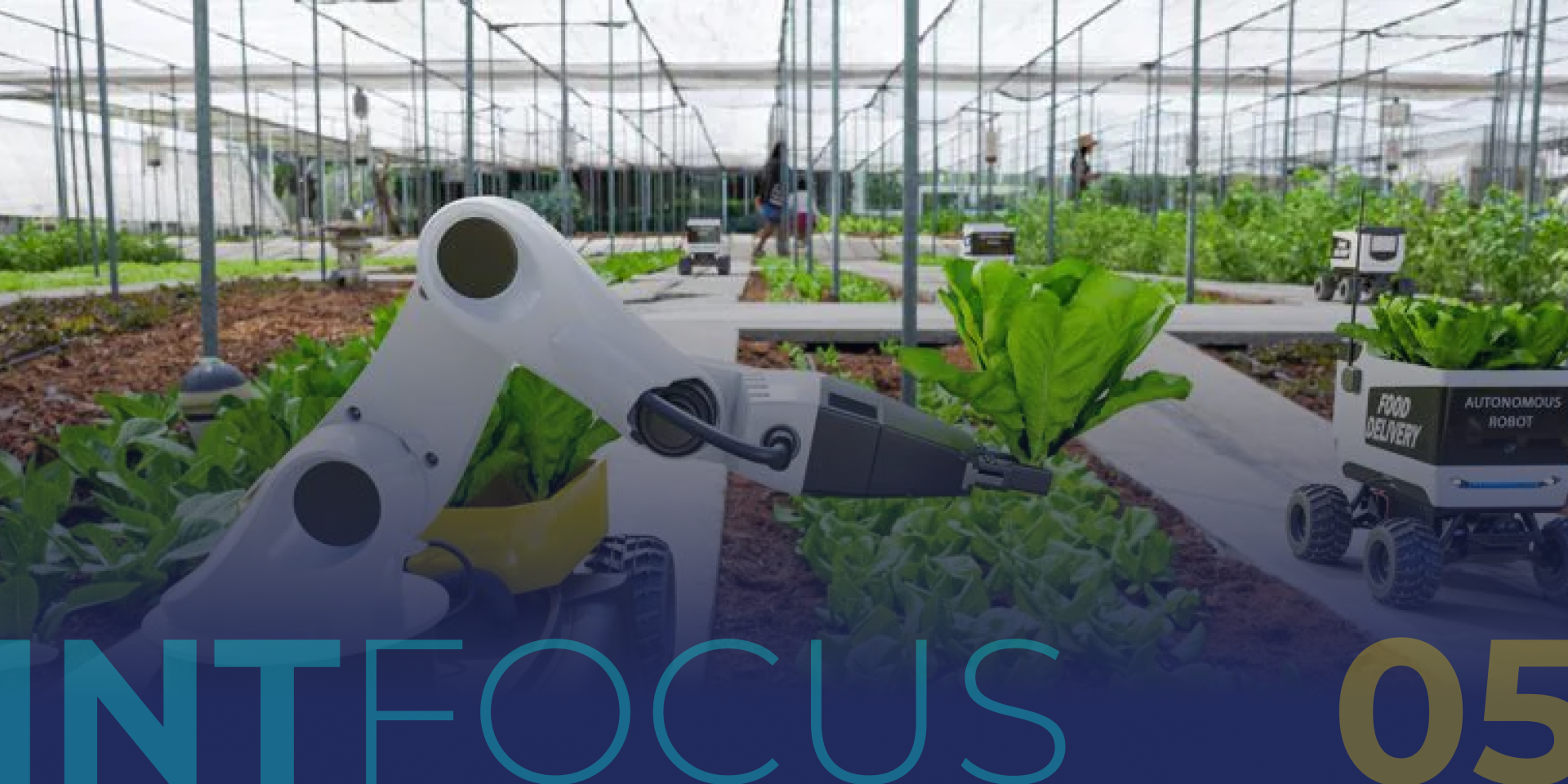
FoodTech is the set of technologies applied across the entire food chain: production, processing, distribution and consumption. 2026 is a year of reckoning more than of promises: vertical farming has gone through a consolidation phase with some high-profile failures, cultivated meat remains banned in Italy while already on sale elsewhere, and an unexpected factor, GLP-1 weight-loss drugs, is reshaping food consumption more than any nutrition-education campaign.
Contents
- What foodtech is
- Vertical farming: the promise and the reckoning
- Precision agriculture: the bridge to the fields
- Alternative proteins: where things stand
- Cultivated meat: the Italian case
- Robotic kitchens and ghost kitchens
- AI in restaurants
- 3D food printing
- Traceability: blockchain and smart labels
- The effect of weight-loss drugs on food
- FAQ and the table of 2035
What foodtech is (definition)
FoodTech is the application of digital technologies, biotechnology and automation to four stages of the food chain: production (agricultural and otherwise), industrial processing, distribution and final consumption, including how we order and prepare food. It is a sector that in 2026 lives with two opposing narratives at once: the innovation story that promises to feed people more sustainably, and the more prosaic one of industrial failures among startups that promised too much, too fast.
Vertical farming: the promise and the reckoning
Vertical farming, growing crops indoors, stacked across multiple levels, with artificial light and full climate control, has gone through a severe consolidation phase after years of aggressive investment: several companies once considered sector leaders have drastically scaled back operations or gone bankrupt. The Achilles’ heel remains energy economics: artificially lighting and climate-controlling energy-intensive crops is a cost that rarely pays off with low-value crops such as lettuce or grains.
| Where it works | Where it struggles |
| High-value-per-portion herbs and microgreens | Low-value crops such as grains or lettuce at large volumes |
| Water- or arable-land-scarce regions (Middle East, city-states) | Markets with expensive electricity and competition from traditional farming |
| Proximity to the end consumer (shorter supply chain) | Business models that had promised rapid industrial scalability |
The sector has not disappeared: it has resized itself around the niches where the economics genuinely work, particularly fresh herbs on the shelf and production for the Middle East, where water scarcity makes the alternative more competitive.
Precision agriculture: the bridge to the fields
Precision agriculture, field sensors, prescription maps, variable-rate treatments, is the technological base underpinning much of foodtech upstream in the chain, but it is covered more fully in the dedicated AgriTech pillar, to which we refer readers rather than duplicating content here.
Alternative proteins: where things stand
The alternative protein market shows opposing trends within itself. Sales of plant-based products are declining in several Western markets after years of double-digit growth, hurt by perceptions of high price and ultra-processing. Precision fermentation, by contrast, is growing: the technique uses engineered microorganisms to produce proteins identical to animal ones (such as some milk caseins) without going through livestock farming. Insect proteins remain a special regulatory case: the EU has approved several species as novel foods, but consumer acceptance remains low outside niche applications such as animal feed or supplements.
Cultivated meat: the Italian case
Cultivated meat (grown from animal cell cultures rather than livestock) has been legal and on sale in Singapore since 2020 and in the United States since 2023, where some restaurants already serve it. In Italy, law 172/2023 bans the production and marketing of food and feed derived from cell cultures, with administrative fines ranging from €10,000 to €60,000 (up to 10% of annual revenue). The law explicitly covers only food derived from vertebrate animals, leaving invertebrates outside the ban.
The legal debate remains open: several observers point to a possible conflict between the Italian ban and the EU principle of free movement of goods, since EFSA (the European food safety authority) has so far received only one application for authorisation of this kind of product in the Union (cultivated foie gras, from French startup Gourmey); if such a product were ever approved at EU level, Italy could not block its import from other member states. The right approach for an informational pillar remains balanced: report the regulatory status and the debate, without taking a side.
Robotic kitchens and ghost kitchens
Robotic kitchens automate repetitive preparation steps, frying, bowl assembly, basic cooking, reducing time and variability, with applications ranging from fast food to ghost kitchens (kitchens with no dining room, built purely for delivery). Circus SE is a reference example in the robotic-kitchen sector. The ghost-kitchen economy went through a natural-selection phase after the pandemic boom: the operators that survived were mostly those able to genuinely optimise fixed costs per order, not those betting only on volume growth.
AI in restaurants
AI-assisted menu engineering analyses sales data to suggest which dishes to promote, drop or reprice based on real margin and demand. On the sustainability side, demand-forecasting algorithms help restaurants and chains order the right quantities of raw ingredients, reducing food waste, a problem that, according to the most widely cited international estimates, affects roughly a third of all food produced globally.
3D food printing
3D food printing remains mostly a niche curiosity, but it has serious applications in two areas: dysphagia (difficulty swallowing in elderly patients or those with specific conditions, where 3D-printed food allows soft textures while keeping the recognisable appearance of the original dish) and personalised nutrition tailored to the individual, still at an experimental stage.
Traceability: blockchain and smart labels
QR-code labels linked to a blockchain ledger make it possible to trace a product’s entire supply chain, origin, processing steps, transport, in a way that cannot be forged. This intersects naturally with Made in Italy and DOP certifications, offering an additional tool against food fraud and Italian sounding abroad.
The effect of weight-loss drugs on food
GLP-1 agonist drugs (Ozempic, Wegovy, Mounjaro and similar), originally developed for diabetes and now a mass phenomenon against obesity, are measurably changing food consumption. According to Coop Italia’s research office, in the first twelve months of use Italian consumers increased spending on fruit, vegetables and protein-rich food by double digits, while halving spending on high-sugar and high-carbohydrate products, with an overall reduction in the shopping basket of around 1.1%. The global food industry is reformulating products to make them “GLP-1 friendly”, higher in protein, less sugary, in smaller portions, and some major brands are even revisiting recipes to make them tastier for a palate the drug has made less sensitive. The right angle for this section is economic and industrial: the effect on Big Food’s bottom line, not medical advice on using the drugs.
FAQ
Is cultivated meat legal in Italy?
No: law 172/2023 bans the production and sale of food made from animal cell cultures in Italy, with fines up to €60,000; it is legal in Singapore and the United States.
Is vertical farming sustainable?
It depends on the crop: it works well for high-value herbs and microgreens, but remains economically weak for low-value crops such as grains, due to the energy costs of lighting and climate control.
Are weight-loss drugs really changing food consumption?
Yes, measurably: Coop Italia data shows a double-digit increase in spending on fruit, vegetables and protein among people using these drugs, and a drop in sugary products.
Are insect proteins widespread in Italy?
They are authorised as novel food at EU level, but consumer acceptance remains low and use is concentrated in niches such as supplements or animal feed, not mass consumption.
What is a ghost kitchen?
A kitchen that prepares food only for delivery, with no dining room or direct public access, often shared by multiple virtual brands in the same space.
The table of 2035
If today’s trends continue, the table of the next decade could see several categories coexisting: precision-fermentation proteins alongside traditional meat, robotic kitchens preparing a growing share of meals eaten outside the home, and a food industry reformulating its products around a consumer who, aided by pharmacology, simply eats less. The open question is whether this leads to a more efficient food system or just a more fragmented one.
Sources
- Law 172/2023 (Italy), ban on producing and marketing food from cell cultures
- EFSA (European Food Safety Authority), status of novel food authorisation requests
- Coop Italia, research office, data on the effect of GLP-1 drugs on food consumption
- Circus SE, industry reference for robotic kitchens