
Home automation is the set of devices, protocols, and software that allow you to remotely or automatically control a home’s systems: lights, heating, security, shutters, and household appliances. In 2026, the industry is undergoing a three-pronged transformation: communication standards between devices are finally converging, generative artificial intelligence is joining home voice assistants, and the home is beginning to be conceived as a true energy hub, not just a place to be automated for convenience.
Index
- What is home automation
- How a smart home ecosystem works
- Matter and Thread: The End of the Standards War?
- Voice assistants and generative AI at home
- Energy: the home as an energy hub
- Saving on your bill: what really works
- Smart security: locks, video intercoms, sensors
- How much does a home automation system cost (2026)
- 3 D construction and hi-tech prefabricated houses
- PropTech: AI in the Real Estate Market
- FAQ and the house of 2035
What is home automation (definition)
Home automation is the discipline that applies automation to a home’s systems, allowing them to be remotely controlled, programmed, or automatically reacted to events (a sensor that detects movement, a time, or a change in temperature). It’s helpful to distinguish three terms often used synonymously: home automation is the technical discipline; smart home is the residential home in which this discipline is applied via connected devices; building automation is the same principle extended to non-residential buildings, such as offices or commercial facilities, where the scale and complexity of the systems are greater.
How a smart home ecosystem works
A smart home ecosystem is built on three levels. Devices are the physical elements: light bulbs, sockets, sensors, thermostats, locks. The hub (or bridge) is the device that acts as a bridge between the various devices and the home network, translating the different communication languages into a common protocol. Finally, the protocols are the actual communication rules: Wi-Fi for devices requiring broadband, Bluetooth for short-range connections, Zigbee, Z-Wave, and Thread for low-power mesh networks specifically designed for the internet of things. Understanding this three-level architecture is the first step to not ending up with devices that, despite being all “smart,” can’t talk to each other.
Matter and Thread: The End of the Standards War?
Matter is the open standard, promoted by the Connectivity Standards Alliance (which includes Apple, Google, Amazon, and Samsung, among others), designed to ensure that devices from different brands work together without the need for separate proprietary hubs. Thread, on the other hand, is the low-power networking protocol that Matter relies on for mesh devices.
The status verified in August 2026: the latest version of the standard is Matter 1.6, released in June 2026, which introduces the so-called Joint Fabric (the ability to more seamlessly share a device between different networks) and new configuration modes via NFC. Versions 1.5 and 1.5.1, which arrived in previous months, extended the protocol to cameras and video intercoms, one of the most requested pieces by users. Thread 1.4 has since become a mandatory standard for new certifications, solving many of the mesh network fragmentation problems.
The standards war, however, is not entirely over: the problem has shifted from the protocol to its implementation. Many commercial ecosystems remain stuck with Matter versions 1.2 or 1.3, and even when a manufacturer declares support for the latest version, it often exposes only a subset of its features in its app. In practice, buying a Matter-certified device ensures basic interoperability, but it still doesn’t guarantee that all of the standard’s advanced features are truly accessible in every ecosystem.
Voice assistants and generative AI at home
First-generation voice assistants, from Alexa to Google Assistant, worked primarily for direct, predefined commands (“turn on the light,” “set a timer”). The arrival of generative language models is changing this interaction: next-generation assistants understand more natural and nuanced requests (“make sure the house is ready for when I get back from the gym”) and translate them into sequences of automations, rather than requiring single, pre-coded commands. The practical limitation remains reliability in ambiguous situations: a vague command can still produce the wrong action, which is why critical automations (alarm, locks) often remain configured with explicit rules rather than entrusted to the free interpretation of a conversational assistant.
Energy: the home as an energy hub
The fastest-growing front in 2026 is home energy management: photovoltaic panels, storage batteries, wallboxes for charging electric vehicles, and heat pumps, all orchestrated by software that decides in real time when it’s best to consume, store, or resell energy to the grid. A concrete example of this trend is smart electrical panels like SPAN, which replace the traditional electrical panel with a device capable of monitoring and controlling individual home circuits in real time. It’s good to be precise on one point: SPAN is a privately held American company, backed by funding rounds (the latest, a Series C of approximately $176 million, reported in early 2026, as well as a $75 million direct investment from Eaton in the same year), and is not publicly traded: anyone looking for a stock ticker won’t find it, because it doesn’t exist.
Matter, as seen, is moving in the same direction: newer versions of the standard have added native support for solar panels, batteries, heat pumps, and charging stations, a sign that energy management is now considered an integral part, not an accessory, of the smart home.
Saving on your bill: what really works
It’s important to be honest about this: smart devices alone don’t automatically reduce your bill. The real savings come from two specific factors: well-configured automations (lights that go out when a room is empty, heating that goes down when you leave the house) and targeted devices such as smart thermostats with thermostatic valves on each radiator. For the average family, a well-configured smart home is worth approximately between 100 and 300 euros a year in savings: a significant but not miraculous figure, which must be commensurate with the cost of the system to understand how many years the investment actually pays for itself.
Smart security: locks, video intercoms, sensors
Smart locks, connected video intercoms, and opening or motion sensors are among the most sought-after home automation applications, combining convenience (opening the door remotely to a courier) and control (seeing who has also played from outside the home). The topic to be treated honestly is cloud/privacy: many of these devices send videos and notifications to the manufacturer’s servers, which means entrusting a third-party company with images of your home. Those seeking maximum privacy control should check whether the manufacturer offers a local processing and storage option, not just cloud, before purchasing.
How much does a home automation system cost (2026)
There is no single price: the cost depends on the size of the house, the number of devices and the desired level of integration. Three realistic investment bands can be identified.
| Livello | Costo indicativo | Cosa include |
| Entry-level (wireless, fai-da-te) | 500-2.000 euro | Hub centrale, alcune lampadine smart, prese intelligenti, un paio di sensori, un termostato: installabile senza interventi murari |
| Medio (wireless completo) | 2.000-8.000 euro | Illuminazione smart per tutta la casa, valvole termostatiche su ogni radiatore, telecamere e sensori di sicurezza, tapparelle motorizzate, videocitofono smart |
| Integrato (cablato, tipo KNX) | 5.000-30.000 euro | Impianto professionale a bus cablato, da realizzare in costruzione o ristrutturazione importante; massima affidabilità e integrazione, richiede un tecnico qualificato |
On the incentive front, the Italian fiscal framework for 2026 distinguishes two paths. The general renovation bonus remains at 50% for the first home and 36% for the second until December 31, 2026, with a deductible spending cap of €96,000 per property unit. For specifically home automation interventions (building automation systems for the remote control of heating systems), often included in the Ecobonus, the 2026 rate has instead dropped to 36% for the first home and 30% for the second, always divided into 10 annual quotas. In both cases, smartphones, tablets and PCs used as a simple command interface are excluded from the deduction, and payments must be made via speaking transfer, never in cash.
3D construction and hi-tech prefabricated houses
3D printing applied to construction allows the creation of walls and load-bearing structures by printing a cement mix layer by layer, reducing construction time and material waste compared to traditional construction. It remains a niche sector today, focused on pilot projects and some single-family homes, rather than mass-market technology. At the same time, the segment of high-tech prefabricated modules is growing, factory-built with integrated home automation systems and then assembled on site much more quickly than traditional construction: a natural bridge between the world of the smart home and the broader world of PropTech.
PropTech: AI in the Real Estate Market
PropTech applies artificial intelligence and data to the buying and selling and management of real estate. Two applications are already mature: automatic property value assessments, based on statistical models that cross-reference market data, home characteristics, and comparable sales in the area; and smart building management, where sensors and software optimize energy consumption, maintenance, and safety of entire commercial or residential buildings. It is a vertical that deserves, in perspective, a dedicated pillar: here it is introduced only as a natural arrival point of the smart home path, not treated exhaustively.
FAQ
Matter è compatibile con i dispositivi che ho già in casa?
Dipende: i dispositivi certificati Matter sono compatibili tra loro per le funzioni di base, ma un dispositivo più vecchio, non certificato, potrebbe richiedere ancora l’app o l’hub del proprio produttore originale.
Serve il neutro per installare dispositivi domotici?
Per molti interruttori e prese smart sì, perché il filo di neutro alimenta il dispositivo anche quando il carico è spento; le case più datate, che spesso ne sono prive nelle scatole a muro, potrebbero richiedere un intervento elettrico preliminare o soluzioni a batteria.
La domotica aumenta il valore di rivendita di una casa?
Un impianto domotico ben integrato è generalmente percepito come un valore aggiunto in fase di vendita, soprattutto se cablato e non basato solo su gadget wireless, ma non esiste una percentuale di rivalutazione garantita e riconosciuta in modo univoco dal mercato italiano.
Conviene un impianto wireless o uno cablato?
Il wireless costa meno ed è installabile anche in affitto o senza opere murarie, ma il cablato (tipo KNX) offre maggiore affidabilità nel tempo ed è la scelta consigliata in caso di ristrutturazione importante o nuova costruzione.
I robot domestici sono già una realtà diffusa?
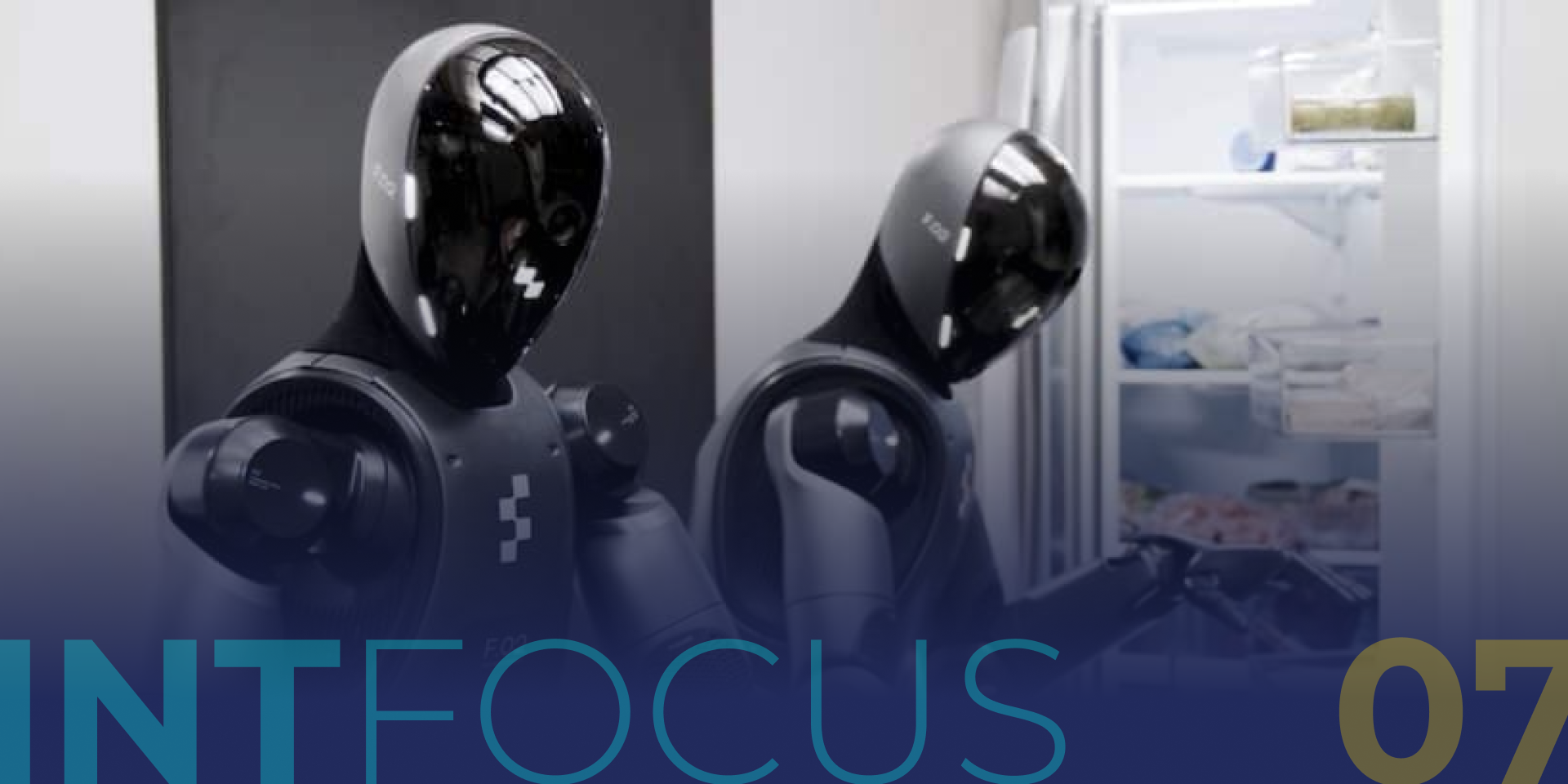
Aspirapolvere e tagliaerba robotici sono ormai diffusi, mentre i robot umanoidi domestici restano oggi in fase sperimentale: un fronte da seguire perché si collega direttamente al più ampio tema della robotica umanoide di consumo.
The house of 2035
If the convergence of standards continues, and if generative AI becomes truly reliable for orchestrating complex automations, the home of the next decade could function as a unique energy and information organism: panels, batteries, appliances and security systems that communicate with each other without friction, and the first home robots capable of performing physical tasks today still entrusted to static sensors. The most interesting bridge to follow is precisely the one towards consumer humanoid robotics: the next frontier of home automation may not be another sensor to be installed on the wall, but a machine that moves around the house.
Sources
- Connectivity Standards Alliance (CSA), status and versions of the Matter standard
- Internet of Things Observatory, Polytechnic University of Milan, conference ‘Smart Home between Continuity and Innovation’ (February 10, 2026)
- Fiscomania, Il Giornale, Cose di Casa, BiblioLus/BibLus, 2026 tax deduction framework for renovations and home automation
- Span.IO, Tracxn, PitchBook, Latitude Media, corporate and financing data on SPAN
- ProntoPro, idealista/news, Architettura Italia, Cronoshare, cost estimates for home automation systems in Italy