
Quick summary:
- Take-Two has filed several patents over the years that offer clues (not confirmations) about the technologies Rockstar is working on for GTA VI.
- One patent breaks animations down into small, combinable “chunks” in real time, aiming for more natural and realistic character movement.
- Another patent describes smarter traffic AI, able to reason about weather, speed limits, and routes in advance.
- A multiplayer patent would let player sessions merge and split online without loading screens, making the world feel constantly populated.
- Another system would observe each player’s playstyle to automatically adjust events and challenges.
- There are also other patents covering more realistic characters, graphics, lighting, online wait times, and anti-cheat.
- A caveat: patents aren’t promises. There’s no guarantee all these technologies will actually make it into the finished game.
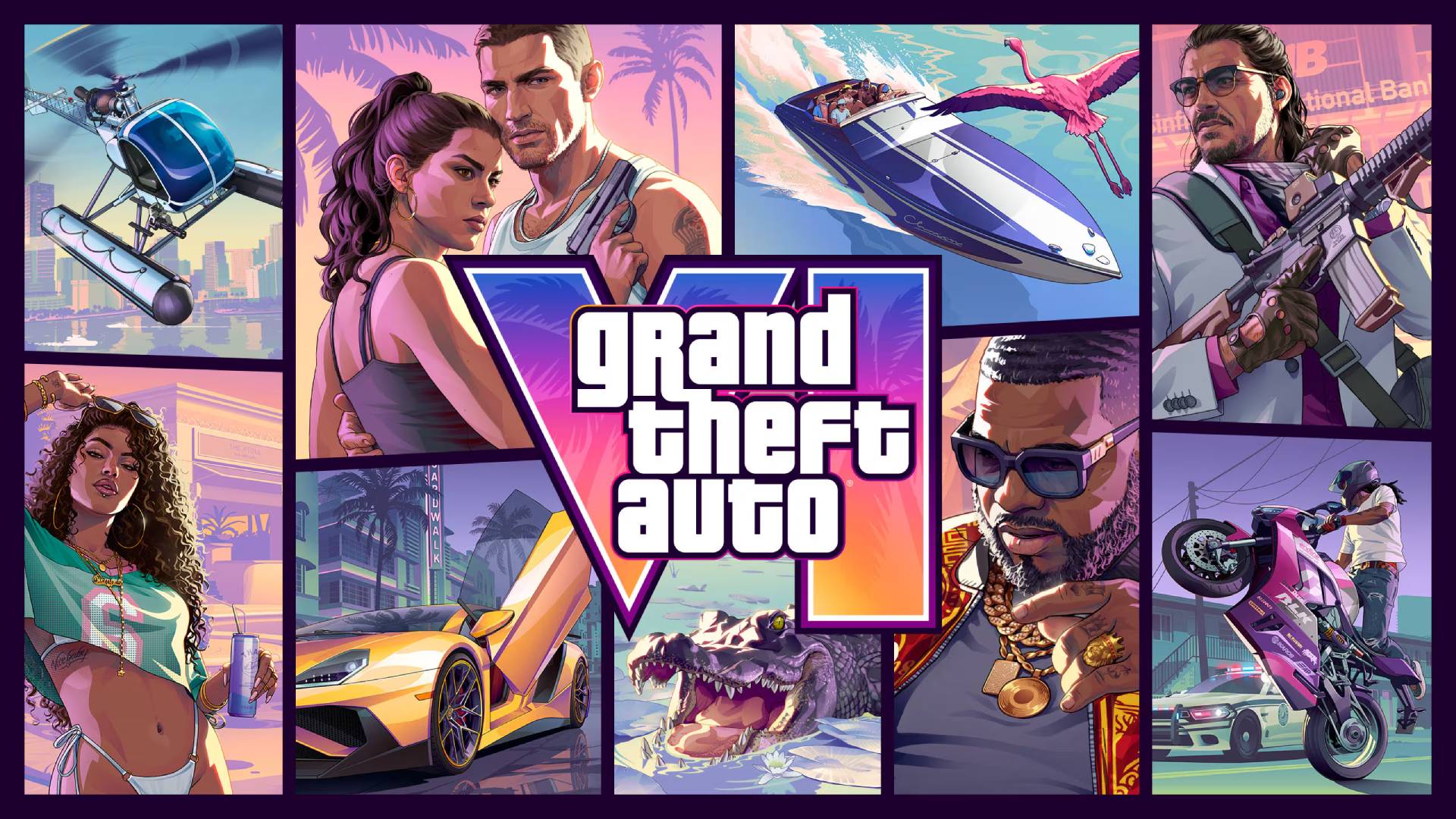
When people talk about innovation in video games, they usually think of better graphics or higher frame rates. But there’s another place where interesting clues can be found: patent offices. Take-Two, the company that owns Rockstar Games, has filed several patents over the past few years that reveal what the studio has been working on. One caveat first: a patent describes a real technology developed internally, but it isn’t a promise. There’s no guarantee that everything patented will actually end up in Grand Theft Auto VI. That said, looking at all the recent patents together, a fairly clear picture emerges of where Rockstar wants to go.
Characters That Move More Naturally
Normally, in video games, every character movement is tied to a fixed animation: press “run” and the same clip always plays. Patent US11620781B1 proposes a different system: it breaks movement down into many small pieces that the game can combine on the fly, depending on what’s happening. The practical result? A character could walk through the rain, carrying a heavy bag on one shoulder, with an injured leg, all at once, fluidly, without the game having to “choose” just one animation out of the three. It would be a real step forward toward more realistic movement.
Traffic That Feels Alive
Patent US20200338450A1 covers the AI behind computer-controlled cars. Usually, cars in video games just follow a path and avoid the nearest obstacles. This system instead gives vehicles a broader awareness of the city: they can factor in rain, speed limits, or the fact that they need to exit the highway soon. In practice, traffic could behave far more convincingly — slowing down before a curve, keeping a safe distance in the rain, changing lanes well in advance. Fewer nonsensical crashes, more human-like behavior.
An Online World Without Seams
The third patent, US11794114B2, deals with the game’s online infrastructure. It describes a way to dynamically merge and split players’ game sessions as they move around the virtual world, without loading screens. A simple example: if a player flies a helicopter from a nearly empty rural area toward a city packed with other players, the game could “merge” them into that crowded session without them even noticing. The effect would be an online world that always feels full of people, with no technical interruptions.
A Game That Adapts to How You Play
Patent US11738272B2 is perhaps the most intriguing: it describes a system that watches how each player approaches the game and adjusts accordingly. If you prefer a stealthy, quiet approach, the game could rearrange guard positions, shop inventory, or random events to match — or challenge — that style. In practice, every player could end up experiencing a slightly personalized version of the same map, tailored to their habits.
All the Other Patents, in Brief
Beyond these four, Take-Two has filed other patents covering various technical aspects of the game. Summarizing a roundup that circulated online and was picked up by industry press, these include technology for creating more realistic characters, a system for simulating fluids on 3D surfaces, a way to enhance graphics without losing detail, improvements to lighting and overall performance, a system that keeps buildings, vehicles, and NPCs looking detailed regardless of camera position, a way to reduce wait times when joining online matches, the use of motion capture combined with AI to predict body poses, a new system for handling in-game transactions, and a stronger anti-cheat system built on hidden variables.
Taken together, these patents paint the picture of a studio working on multiple fronts at once: more believable characters, a world that feels alive, smoother online play, and a gaming experience tailored to each player. None of these technologies alone would be revolutionary. But if even a portion of these ideas actually made it into GTA VI, the game wouldn’t just be “bigger” than its predecessors — it would be qualitatively different in how it simulates people, vehicles, and players.
A Word of Caution
It’s worth repeating in closing: patents are legal tools that companies use to protect their ideas, often years before a game is released. They’re not an official list of what we’ll find in Grand Theft Auto VI. They are, however, solid clues about where Rockstar is investing its time and energy. Until the game actually comes out, all of this remains — as it should — a set of hypotheses. Well-grounded hypotheses, but hypotheses nonetheless.