

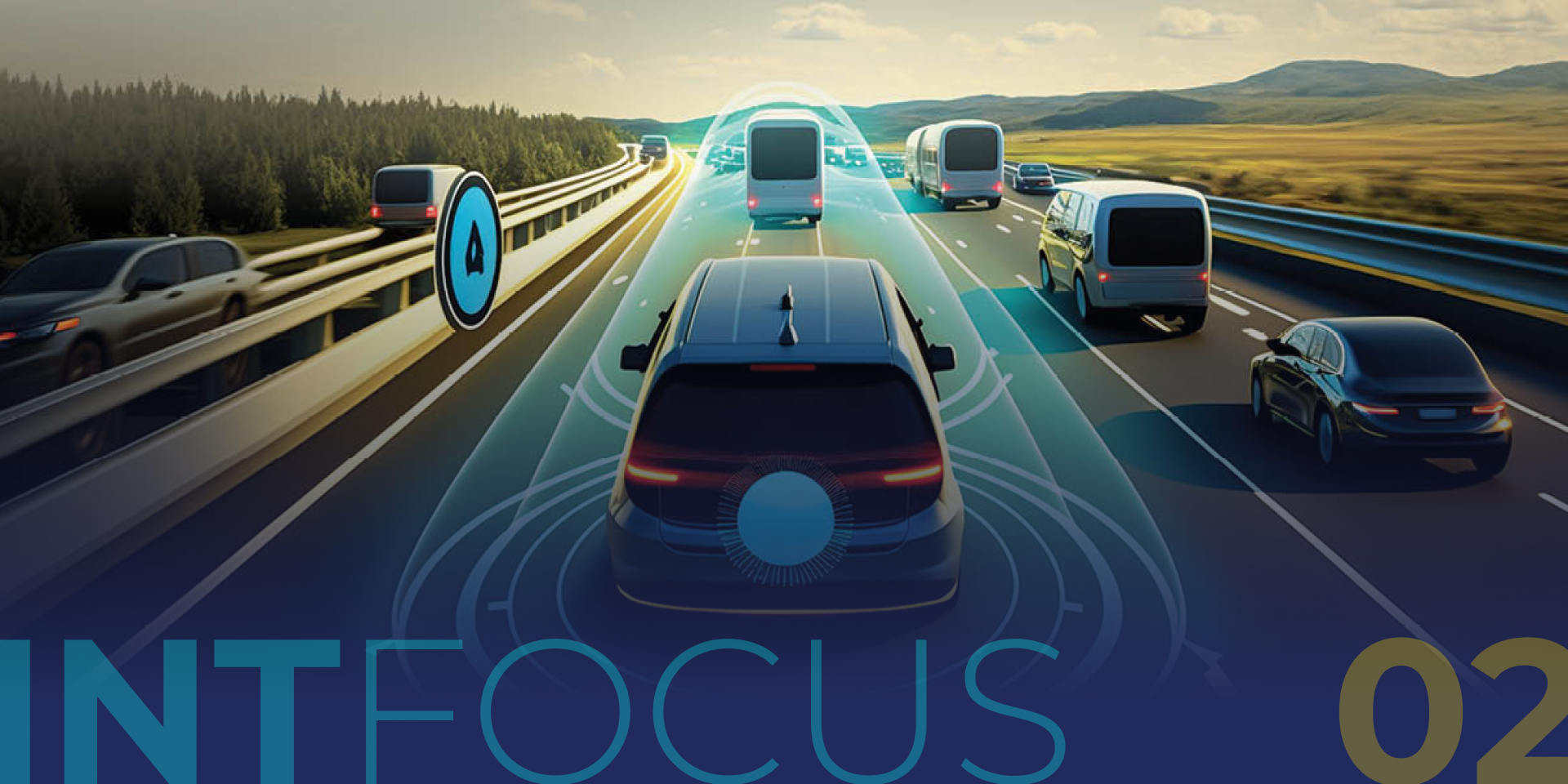
Smart mobility is the set of technologies and services that make urban travel more efficient, shared and low-impact: from electric vehicles to self-driving cars, from shared micromobility to AI-managed traffic lights. In 2026 this is no longer just a white-paper prospect: robotaxis, eVTOLs and regulated e-scooters are already part of everyday life in several cities around the world, Italy included in some segments.
Contents
- What smart mobility is
- Why urban mobility has to change
- Electric cars: where things really stand
- Robotaxis and self-driving: who is already on the road
- Micromobility: e-scooters, bikes and Italy’s new rules
- MaaS: one subscription to move around
- Smart traffic lights and AI-managed traffic
- Flying taxis (eVTOL): promise and reality
- V2X: when vehicles talk to the city
- Cities that are already changing
- FAQ and the city in 2035
What smart mobility is (definition)
Smart mobility is the organisation of urban travel around four mutually reinforcing pillars: vehicle electrification, driving autonomy, shared use (sharing instead of ownership) and the connection of data between vehicles, infrastructure and digital platforms. It is not a single technology but a shift in paradigm: from a privately owned vehicle driven by a person, to movement as a service orchestrated by software.
Why urban mobility has to change
Italians lose an average of several dozen hours a year to urban traffic, according to European Commission estimates on congestion in large cities. City intersections generate local pollution levels up to 29 times higher than free-flowing roads, largely due to constant braking and accelerating. On top of that comes the economic cost of commuting, in fuel, lost time and vehicle wear: three concrete, non-ideological reasons why cities are investing in smart mobility.
Electric cars: where things really stand
2026 is the year electric vehicles stopped being a niche phenomenon in Europe. According to ACEA data, battery electric vehicles (BEVs) reached 20.7% of new registrations in the EU in the first half of 2026, up 35.7% year on year: one in five new cars sold today is fully electric.
Italy is riding the growth but remains behind in absolute terms: in the first half of 2026 its electric share stood at just 8.5%, against 28.5% in France and 24.1% in Germany, even though its percentage growth is among the fastest in Europe (roughly +75% year on year). Entry prices have dropped below €19,000, driven mainly by Chinese models such as the Leapmotor T03, the top-selling BEV in Italy in spring 2026, while Tesla faces greater competitive pressure precisely because of this. Two honest weak points remain: the resale value of used EVs, still uncertain, and the public charging network, which is less dense in Southern Italy than in the Centre-North.
Robotaxis and self-driving: who is already on the road
2026 is also the year the robotaxi stops being a Californian experiment and starts setting foot in Europe, albeit several years behind China and the United States.
| Operator | Where it actually operates | Status mid-2026 |
| Waymo (Google) | USA (~3,000 vehicles across a dozen cities); corporate openings in Spain, France, Germany, the UK | Real commercial service only in the US; European tests in preparation |
| Baidu Apollo Go | China (over 20 million cumulative rides), Dubai, Abu Dhabi; Level 4 permit in Switzerland (AmiGo project with PostBus) | Already commercial outside China in Dubai/Abu Dhabi; safety operator on board in Swiss trials |
| Pony.ai / WeRide | China; tests with Uber in Munich and Madrid | Chinese fleet expansion, ~1,000-1,700 vehicles; European tests not yet commercial |
| Wayve + Uber | London | On-road tests with a safety driver; commercial service announced no earlier than late 2026 |
| Italy (no active operator) | – | Requires Ministry of Transport authorisation plus a permit for public-road testing; no public service launched yet |
Zagreb is, as of mid-2026, the European city with a robotaxi service genuinely operating for the public; Munich is the most contested, with five different operators racing for a commercial launch by year end. In Italy the sticking point remains harmonising EU type-approval with national authorisations (see more on Baidu and Waymo robotaxis and on Xpeng).
Micromobility: e-scooters, bikes and Italy’s new rules
2026 brings Italy’s first real regulatory tightening on electric scooters. Since 16 May 2026, an identification plate (the so-called “targhino”, tied to the owner’s tax code and requestable via SPID or CIE digital identity) has been mandatory, and since 16 July 2026 a dedicated liability insurance policy, separate from a generic personal one, has been required. Fines for non-compliance range from €100 to €400. The rules already in force remain valid: minimum age 14, approved helmet, speed limits of 20 km/h on urban roads and 6 km/h in pedestrian areas, no passengers allowed.
Riders using shared e-scooters do not need to manage the plate or the policy themselves, since operators handle these at the fleet level; the obligation falls on owners of private vehicles. One technical quirk: the direct compensation procedure (CARD) used for cars is currently suspended for e-scooters, pending consolidated risk statistics, so anyone suffering damage must claim directly against the responsible party’s insurer.
MaaS: one subscription to move around
Mobility as a Service (MaaS) is a model that bundles public transport, bike and scooter sharing, taxis and car sharing into a single app and a single subscription, removing the need for separate apps and tickets for each mode. Helsinki, with its Whim platform, remains the most frequently cited pioneering case internationally. In Italy the MaaS4Italy programme, funded through PNRR (Italy’s national recovery plan), has brought trials to several cities, including Milan, Rome, Naples and Turin, integrating local public transport and shared mobility on a single digital platform, with results still uneven from one city to another.
Smart traffic lights and AI-managed traffic
The most mature project in this field is Google’s Green Light, active in a dozen cities worldwide (including Hamburg, Manchester, Seattle, Rio de Janeiro and Abu Dhabi) across roughly 70 intersections: by analysing traffic data and driving patterns from Google Maps, the system suggests traffic-light timing optimisations to municipal engineers without requiring any change to physical infrastructure. Google’s stated results point to a 10-20% reduction in fuel consumption and waiting times, and up to 30% fewer stops at traffic lights in some pilot intersections.
In Italy, trials are more focused on safety than on flow: in Rome, since January 2026, a smart traffic light project on Via Cristoforo Colombo has been detecting vehicle speed in real time and automatically triggering a red light if a vehicle exceeds the limit, with the stated goal of reducing accidents on high-risk stretches.
Flying taxis (eVTOL): promise and reality
eVTOLs (electric vertical take-off and landing air taxis) are one of the most closely watched, and most hype-prone, fronts of smart mobility. The status verified as of August 2026: Joby Aviation has reached FAA Stage 4 certification (the second-to-last step before final US certification) and is aiming for a commercial debut in Dubai during 2026, leveraging the faster certification path offered by the GCAA (the Emirati civil aviation authority), likely even ahead of its US commercial launch. Archer Aviation is testing its Midnight aircraft in Abu Dhabi. In China, EHang already operates commercially on selected tourist routes.
Europe’s picture is more cautious: EASA applies its own certification standard (SC-VTOL), stricter than the US and Emirati approaches, and the sector has seen the financial troubles of players such as Volocopter and Lilium. In Italy, talks are underway between ENAC (the civil aviation authority) and Archer over possible tests at Grottaglie (Puglia), while the UrbanV vertiport planned for Fiumicino airport is running behind its original schedule. The right tone for covering this sector at this point in 2026 is cautious optimism: neither hype nor write-off.
V2X: when vehicles talk to the city
V2X (vehicle-to-everything) is the set of standards that let a vehicle exchange real-time data with other vehicles, with traffic lights, with pedestrians carrying a smartphone, and with road infrastructure. It requires low-latency 5G networks and standards shared between manufacturers and cities: it is the infrastructure that self-driving cars and smart traffic lights need to take the next step, and it connects directly to the connected-home topics covered in the Smart Home pillar.
Cities that are already changing
Shenzhen, in China, is often cited as an advanced laboratory for robotised urban mobility, with trials ranging from double-parking removal robots to widespread electrification of public transport.
Oslo has built its international reputation by removing almost all parking from its city centre and investing in cycling infrastructure and electrification, with a stated goal of zero road deaths and serious injuries (“Vision Zero”).
Milan remains the most mature Italian case, with its Area B and Area C low-emission zones regulating access to the city centre and the inner ring: a local angle that no international smart-mobility pillar tells, and one worth updating every time the municipal regulation changes.
FAQ
When will robotaxis arrive in Italy?
There is no date yet: they require authorisation from the Ministry of Transport and a permit for public-road testing. As of mid-2026 no operator has a public service running in the country.
Will electric scooters disappear from Italian cities?
No: the new rules (mandatory plate and insurance from 2026) do not ban e-scooters, they bring them closer to the regulatory regime of other vehicles.
How much will flying in an eVTOL cost?
There is no consolidated public price list yet: the first commercial services, Dubai leading the way, will launch as a premium experience, closer in price to an executive taxi than a standard one.
Does MaaS replace private car ownership?
Not necessarily: the goal is to reduce car use by making it convenient to combine public and shared transport, not to ban car ownership.
Are electric cars already good value in Italy?
Entry prices have dropped below €19,000 and running costs are lower, but the resale value of used EVs and the charging network in Southern Italy remain honest points of concern.
The city in 2035
If electrification, autonomy, sharing and connectivity keep maturing together, the city of the next decade could flip today’s hierarchy: fewer owned cars, more shared and often driverless vehicles, traffic lights that adapt to real-time flow, and an urban sky where the first flying taxis stop being a tech-fair curiosity. The open question is not whether this will happen, but how fast the rules, not the technology, will allow it to happen.
Sources
- ACEA (European Automobile Manufacturers’ Association), BEV registration data, first half 2026
- Waymo, Baidu Apollo Go, Pony.ai/WeRide, Wayve, corporate communications and trade press on robotaxi service status
- Google, stated results from the Green Light project
- FAA (Federal Aviation Administration) and EASA, eVTOL certification status
- MaaS4Italy (PNRR), status of Mobility-as-a-Service projects in Italian cities
- City of Milan, Area B and Area C regulation