
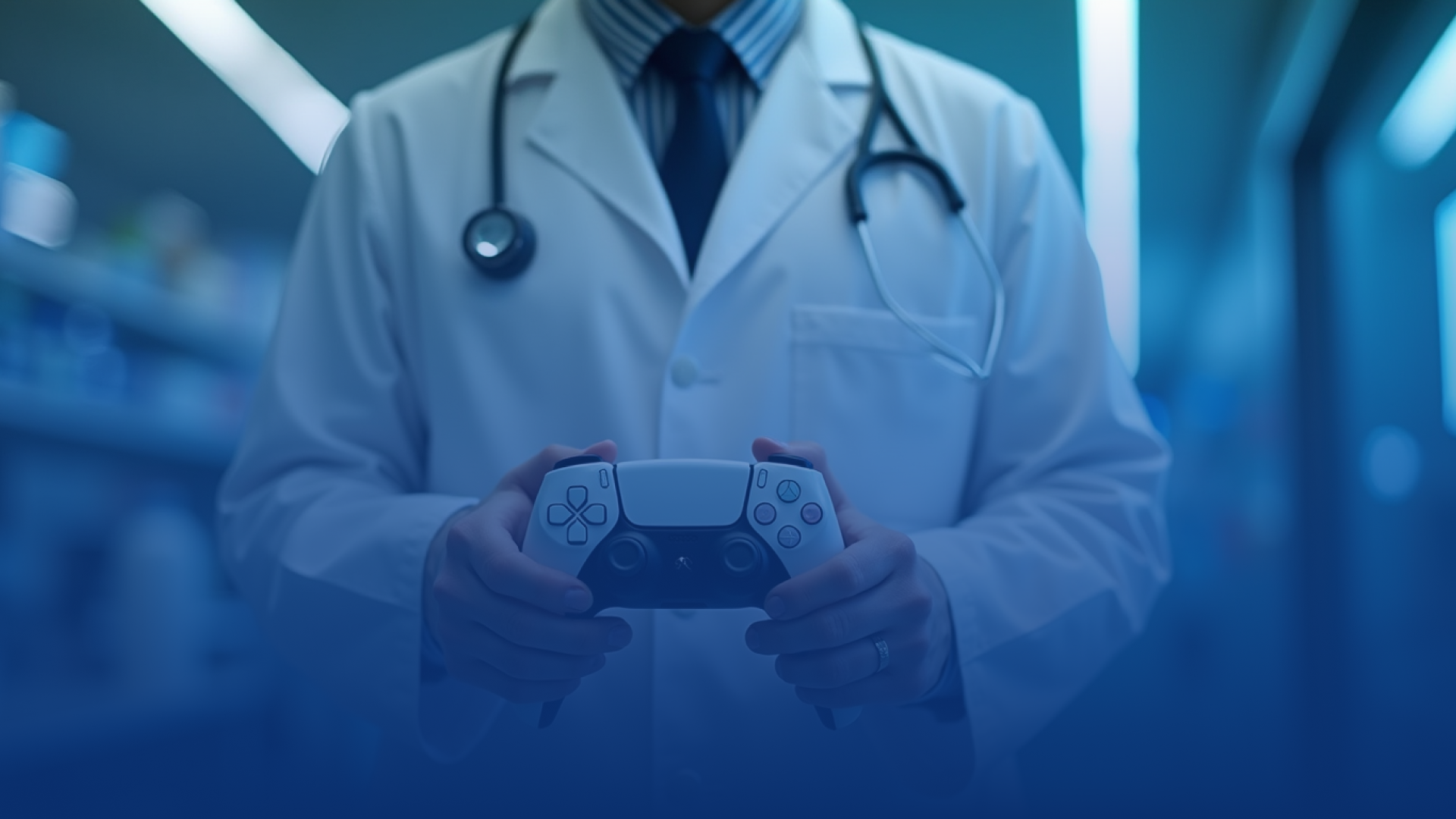
A striking test in surgery has caught the eye of researchers and doctors. Surgeons in Zurich, Switzerland, recently operated on a pig from far away. They used a device few would have thought fit for surgery: the PlayStation 5’s DualSense controller. The controller was made for video games. Yet it proved to be a great tool in medicine. It shows how tech can change remote surgery.
The remote surgical experiment: how does it work?
The Zurich surgeons are known for their cutting-edge research. They performed a remote endoscopy on a pig that was over 5,700 miles (about 9,300 km) away, in Hong Kong. The distance was huge. Yet thanks to a game controller like the DualSense, the operation was a success.
The test used a robotic surgical system linked over the internet. It let the surgeons in Zurich control the tools in real time. They could make complex moves as if they were in the same room as the patient. A live video feed showed them the area to treat, so they could act in real time. They kept the delay (latency) below 300 milliseconds. This was a key goal to keep the operation precise. It was one of the main reasons for the success, because real-time control is vital in remote surgery.
Why DualSense? Revolutionary tactile precision and feedback
The DualSense is not just a game controller. It is a smart device with great precision, thanks to its advanced touch feedback. The Zurich surgeons used these features to move inside the pig’s body. With the controller, they changed an outside magnetic field that steered a magnetic endoscope. This gave them precise control during the operation. Such control is key for complex procedures like endoscopy.
In surgery, precision is vital. Every move must be carefully measured. The DualSense made this possible and overcame the hurdles of remote surgery. Its vibration and touch feedback made the surgeons feel as if they were handling the tools directly. This gave them more control over the procedure.
The DualSense controller from Sony: More than just a gaming tool
Sony’s DualSense was launched as the official controller for the PlayStation 5. But its new features have made it more than a game tool. It offers dynamic touch feedback, adaptive triggers and a better grip. This makes it well suited to tests like the one in Zurich.
Its advanced touch feedback uses vibration to mimic different feelings. Users can sense changes in pressure or movement. These features can be vital in surgery. In this test, the surgeons used the DualSense to move surgical tools with great precision, just as they would with a standard medical device.
A Step Towards Global Distance Surgery
A main goal of the test was to show that remote surgery can work, even when surgeons are thousands of kilometres from the patient. The DualSense and other advanced tools let researchers explore surgery in remote areas, where few expert surgeons are available.
This kind of research could have a huge impact on the future of medicine. If remote surgery becomes common, people in need could get surgery wherever they live. Combining video game tech with medicine could open the door to global surgery. It could improve access to care in areas without advanced hospitals.
The future of remote surgery: Technology and medicine come together
The DualSense test is just the start of a new era for remote surgery. These uses are still being tested today. But low delay, precise touch feedback and remote control together offer huge potential for the future of medicine.
The world is more and more connected. Tech once meant for video games could change healthcare. It could let expert surgeons operate in real time anywhere in the world. This kind of innovation could cut costs and make surgery work better. It could also cut waiting times for people in remote areas who need urgent operations.
In short, the Zurich surgeons’ test with Sony’s DualSense is a big step forward for remote surgery. By combining the best of gaming tech with medical needs, it opens a new era of global surgery, where distance no longer stops people from getting the best care.