
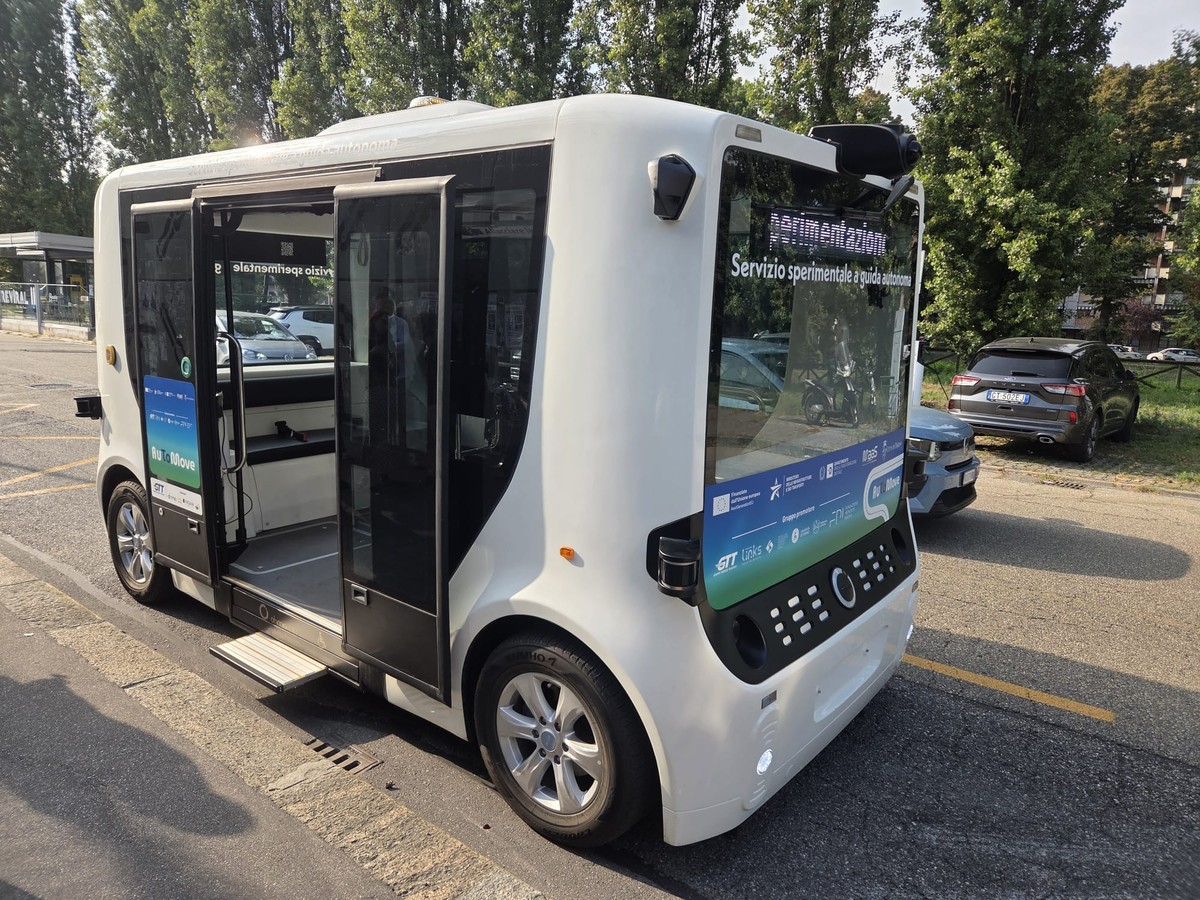
Turin reinforces its position as a global smart mobility hub with the operational rollout of AuToMove, a high-tech pilot under the MaaS4Italy national framework. Managed by the Department for Digital Transformation and the Ministry of Infrastructure and Transport, the project integrates autonomous shuttles into the urban fabric via advanced V2X protocols.
Key Takeaways
- The Event: Launch of on-road testing for the AuToMove project in Turin’s Nizza Millefonti district.
- Strategic Impact: Shifting public transport from fixed-route to flexible, autonomous “on-demand” models.
- Metrics: 5-km experimental loop managed via dedicated 5G and V2X infrastructure.
- Current Outlook: Active pilot phase funded by Italy’s PNRR (Recovery and Resilience Plan).
AuToMove Project: Technical Integration and V2X Protocols
The Turin trial is more than a mobility test; it is a comprehensive urban communication ecosystem. The system relies on V2X (Vehicle-to-Everything) architecture, allowing shuttles to interact in real-time with smart city infrastructure managed by Torino City Lab.
As stated in the official release from the Department for Digital Transformation, the initiative aims to evaluate citizen response and onboard system efficiency. Highlighting the strategic importance of the operation, the Undersecretary for Technological Innovation stated:
“We are ready to take a further step forward to make our urban mobility more modern, safe, and sustainable through autonomous driving.”
MaaS Architecture and the “On-Demand” Model
The core of MaaS4Italy is the creation of a single digital platform. In Turin, AuToMove introduces the on-demand transport variable: users can book the autonomous shuttle via an app, transforming public transport from a rigid, fixed-line system into a dynamic service.
This paradigm shift aims to turn mobility into an integrated service (SaaS/MaaS), where citizens can plan and pay for their entire intermodal journey in a single solution. According to intnews.it analysis, the technological neutrality adopted allows for testing interoperability between different software providers, avoiding vendor lock-in and ensuring industrial scalability.
C-Level Impacts and Smart City Investment Scenarios
For Tech sector decision-makers and managers, the Turin case serves as an operational blueprint for PNRR investments. The adoption of open standards and Public-Private Partnerships (PPP) demonstrates that transport automation is a tangible asset for urban operational efficiency. Experts at intnews.it emphasize that the primary challenge remains traffic data cybersecurity, a cornerstone for building user trust in driverless solutions.