
Key Takeaways
- Scenario: Transition from animal/mechanical prostheses to bio-inspired polymer valves manufactured via automated 3D printing.
- Business Impact: Significant reduction in costs associated with re-interventions and chronic pharmacological patient management.
- Data Point: 95% reduction in tissue calcification with a projected operational longevity exceeding 20 years.
Exceeding the 10-Year Limit: Proprietary Polymer Engineering
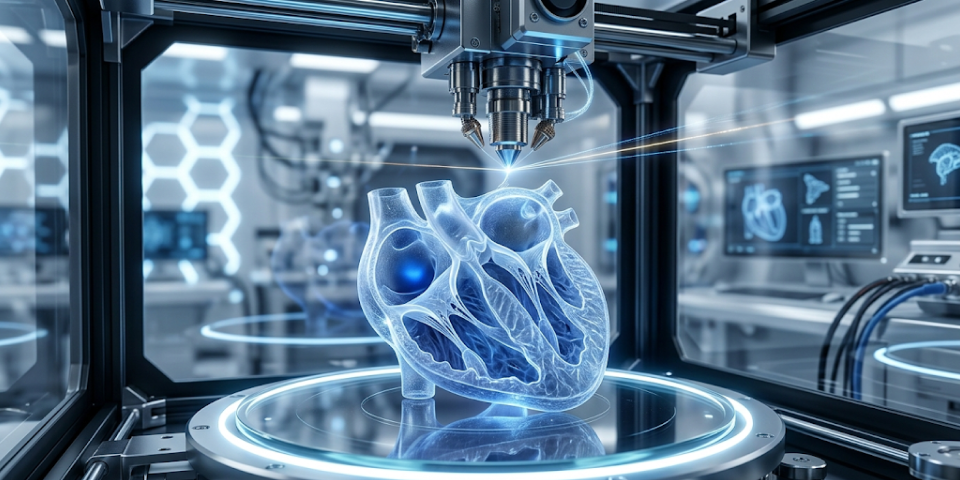
CoraMetix technology addresses the primary bottleneck in modern cardiac surgery: the structural degradation of bioprostheses. While current porcine or bovine valves undergo accelerated calcification, the newly engineered polymeric material maintains constant flexibility under cyclic stress. Medical 3D printing.
The architecture of these devices is not merely a geometric replica but a functional simulation of the human valvular apparatus. Consequently, 3D printing automation ensures micrometric precision that remains impossible to achieve through the manual suturing of traditional animal tissues.
Native Hemodynamics Simulation and Mechanical Stress Reduction
Laboratory tests conducted in Q1 2026 demonstrate that the hemodynamic profile of CoraMetix valves drastically reduces blood flow turbulence. Such fluidity prevents micro-thrombus formation, thereby eliminating the necessity for patients to undergo lifelong anticoagulation regimens. Moreover, the bio-inspired design acts as a catalyst for restoring cardiac function nearly identical to physiological standards.
Economic Impact on Healthcare Systems: The “One-and-Done” Model
Wide-scale adoption of high-durability synthetic prostheses promises to redefine cardiology department budgets. The “One-and-Done” strategy aims to lower the frequency of revision TAVI procedures, which currently impose a multi-billion dollar burden on global healthcare systems.
Furthermore, savings derived from the elimination of anticoagulant administration and related INR monitoring represent an immediate competitive advantage for insurance providers and public health entities.
Eliminating Dependency on Anticoagulant Medication
Unlike pyrolytic carbon mechanical valves, which necessitate the use of Warfarin, the CoraMetix polymer is inherently thrombo-resistant. As a result, the risk of intracranial hemorrhages or drug-related systemic complications is virtually eliminated, radically improving the quality of life for post-operative patients.ù
Clinical Projections and Global Adoption by 2027
Ongoing clinical trials indicate unprecedented scalability due to the automated nature of production. By the end of 2027, CoraMetix production capacity is expected to meet 15% of global valve replacement demand, shifting the market axis from biological materials to advanced medical-grade polymers.