

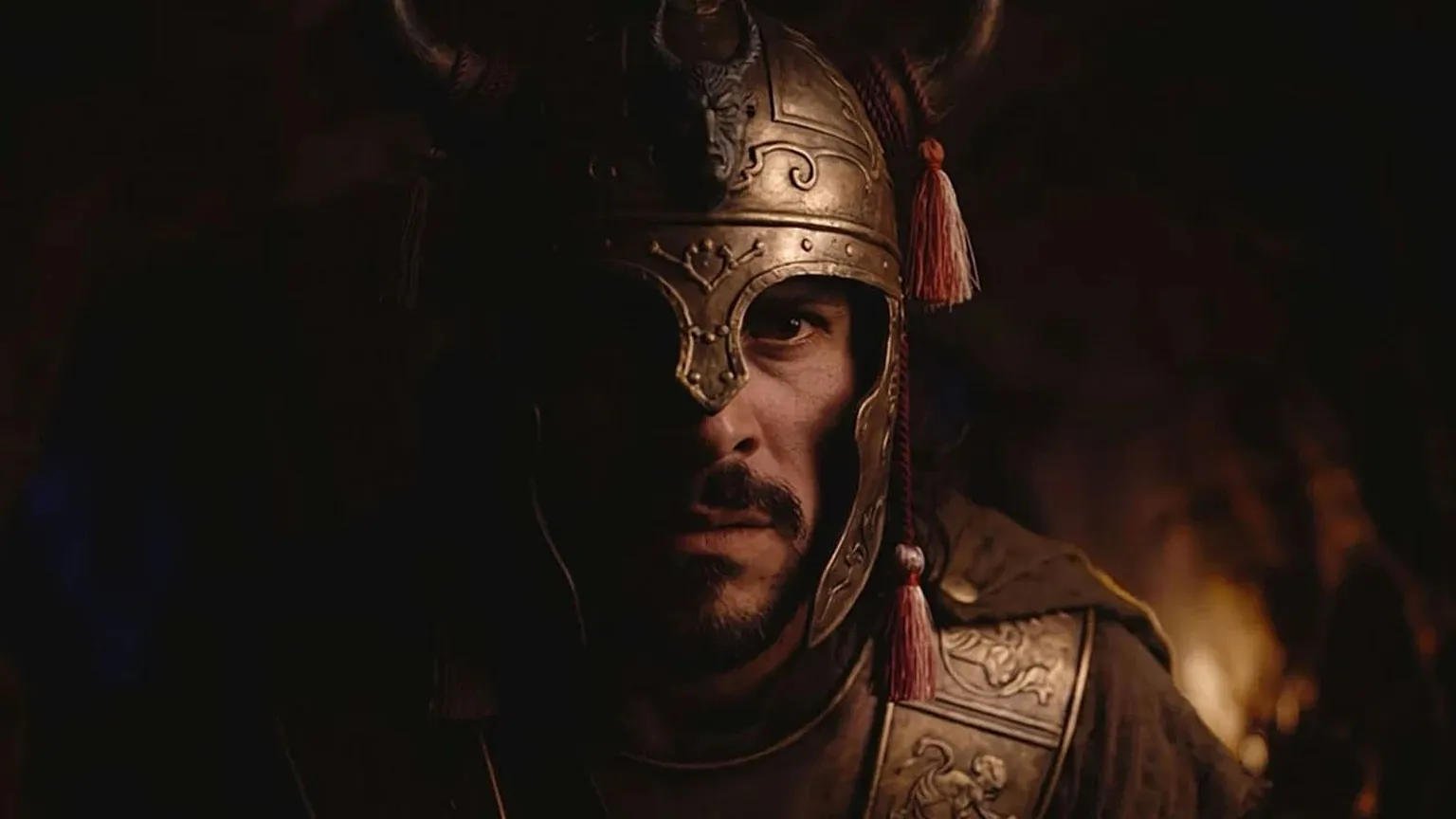
Tomorrow, Italian cinemas will release The Odyssey, Christopher Nolan’s latest film starring Matt Damon as Ulysses — a day ahead of its US debut. Setting the story itself aside, the most compelling aspect for anyone following technological innovation lies behind the camera: for the first time in cinema history, a full-length feature has been shot entirely with IMAX 70mm film cameras, a milestone that demanded newly engineered hardware and bespoke on-set solutions.
The starting problem: a camera that was too loud
IMAX film cameras, despite delivering image quality unmatched by digital sensors, have historically been unusable in dialogue scenes: the mechanical film-transport system produces noise that bleeds into live sound recording. Nolan had already grappled with this issue in 2020 on Tenet, without reaching a definitive fix. For The Odyssey, he returned to IMAX’s engineers to finish what that earlier project had started: a soundproofed housing, lined internally with sound-dampening material, capable of isolating the camera’s mechanical noise.
The result is a new camera system, named “The Keighley” in honour of longtime IMAX executives Patricia and David Keighley (the latter passed away just weeks after filming wrapped). Once sealed inside its soundproof casing — informally nicknamed “the blimp” — the rig weighs roughly 300 pounds (136 kg): so heavy that camera dollies had to be fitted with dedicated steel plates to support it. Robert Pattinson, one of the film’s stars, compared its bulk to having an SUV parked in front of him during shooting.
The mirror that saved eye contact
The bulky housing, however, introduced a non-trivial side effect: in close two-shots, the camera’s sheer size made it physically impossible for actors to look at one another while staying properly aligned with the lens. The crew solved this with a system of mirrors placed beside the camera: performers would look at their scene partner’s reflection, which was then relayed correctly on-axis into the lens — a minor technical fix in concept, but one that proved decisive for the emotional authenticity of dialogue-driven scenes.
The first film shot entirely on large-format film
With the noise problem solved, the production could push further: The Odyssey is the first feature film to be shot from start to finish on IMAX 70mm cameras, without alternating — as in Nolan’s previous films, including Oppenheimer — between IMAX footage and sequences shot in more conventional formats. The film stock used, known as 15/70 (15 perforations per frame), produces a physical frame roughly nine times larger than standard 35mm, with an equivalent digital resolution industry sources estimate at between 12,000 and 18,000 pixels — well beyond current digital projection standards of 2K or 4K.
At roughly 172 minutes, the film comes in just under the three-hour mark — not by coincidence, given that IMAX’s film-based projection infrastructure imposes strict physical limits on reel length for the roughly 25 theatres worldwide currently equipped to screen the full 70mm version.
No CGI for the monsters: practical creatures on set
In keeping with the choice to maximise the photochemical image, the production largely avoided computer graphics for the mythological creatures drawn from Homer’s poem, from the Cyclops Polyphemus to Scylla. For Polyphemus, for instance, the crew built a 20-foot animatronic puppet used physically on set. The logic behind this choice is straightforward: the extreme sharpness of IMAX film exposes CGI imperfections far more readily than standard digital formats, pushing the visual effects team toward practical solutions — animatronics, puppetry, real locations shot across Greece, Sicily, Morocco, Iceland and Scotland — with digital work reserved for targeted finishing touches.
An investment to match the technical gamble
Nolan’s most expensive film to date, with an estimated budget of around $250 million, The Odyssey amounts to far more than a stylistic experiment. It is a case study in how a single technical constraint — the noise of a film camera — can cascade into a series of engineering innovations: the soundproof housing, the mirror rig, the logistics of transporting and developing over two million feet of film. Together, these redefine what is technically achievable in a large-scale film production.
Whether Nolan’s gamble — and IMAX’s, given the substantial engineering resources it committed to the project — will open the door to a new generation of “all-film” productions, or remain a one-off made possible only by the clout of a single filmmaker able to push through solutions otherwise economically unviable for the industry, remains to be seen.