

Key Takeaways
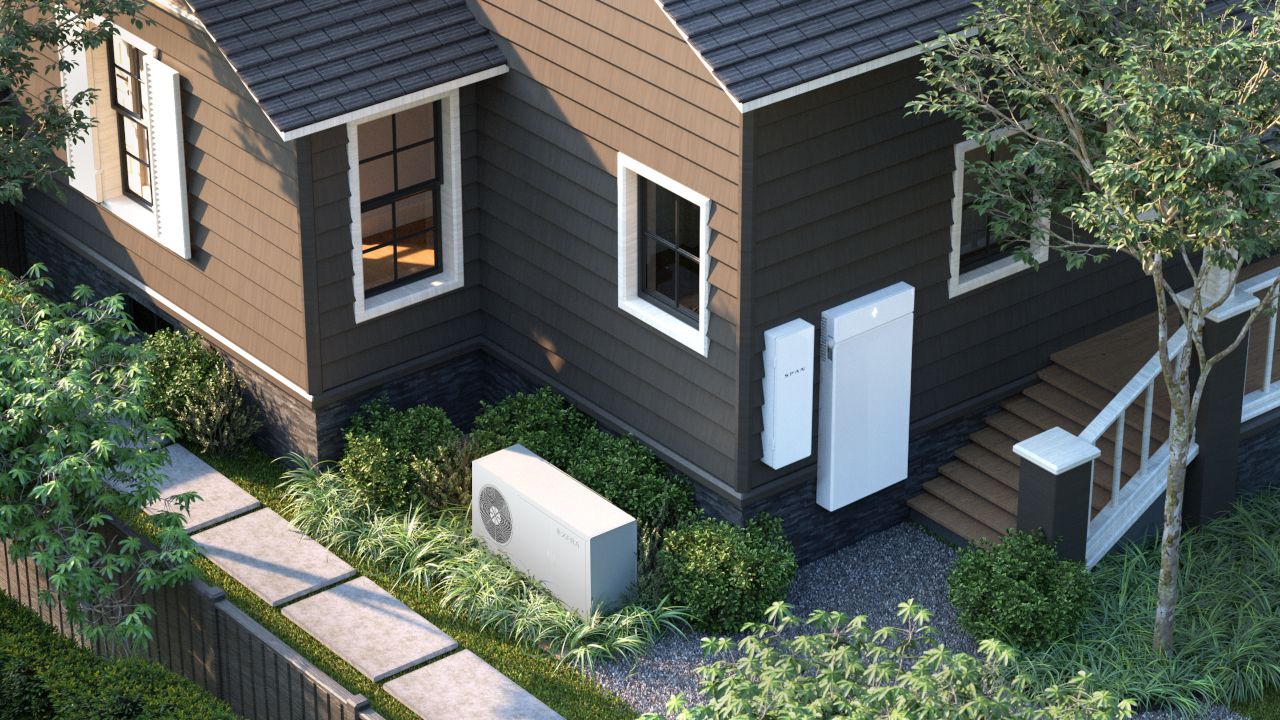
- Scenario: NVIDIA and smart grid specialist SPAN have developed XFRA, an outdoor residential computing node designed to decentralize artificial intelligence workloads using home infrastructure.
- Business Impact: This model bypasses the interconnection bottlenecks and long lead times of traditional utility grids for large data centers, offering homebuilders and cloud providers immediate, cost-effective scalability for AI inference.
- Data Point: Each unit utilizes up to 40% of unallocated residential electrical capacity (stranded energy), integrating enterprise-grade hardware and 15kWh energy storage systems managed via proprietary XSOL orchestration software.
The Paradigm of Distributed Inference: Moving Beyond Centralized Data Centers
The exponential growth of large language models and generative artificial intelligence applications is rapidly pushing centralized computing infrastructure to its structural limits. Traditional data centers face a severe power supply crisis, with projections estimating they will consume over 9% of the entire United States power grid by 2030. Consequently, the SPAN XFRA project, technologically backed by NVIDIA, introduces a fundamental architectural paradigm shift by moving the execution of workloads related to Edge AI Inference directly to the grid edge within private residences.
This approach addresses the critical requirement to minimize latency and optimize operational costs for large-scale model distribution. Rather than relying exclusively on massive hyperscale facilities, the network asynchronously distributes computational tasks to an interconnected mesh of micro-nodes. Furthermore, this decentralized infrastructure becomes inherently resilient and scalable, mitigating the impact of single points of failure on the national grid while significantly accelerating response times for end-users.
Technical Architecture of the XFRA Node and the $22,000 Misconception
From an engineering perspective, the XFRA node is configured as a ruggedized outdoor appliance installed adjacent to the residential electrical meter. Internally, the chassis houses enterprise-grade server hardware developed in partnership with Dell, equipped with NVIDIA RTX PRO 6000 Blackwell Server Edition GPUs, AMD EPYC processors, and high-density memory configurations supporting up to 3TB of RAM. Moreover, to ensure operational stability without overloading the home power supply during standard peak consumption periods, the unit integrates a 15kWh rapid-discharge backup battery and interfaces directly with the SPAN Smart Panel, an intelligent electrical panel capable of real-time load shedding.
Recent widespread social media reports indicating a flat $22,000 annual payout to homeowners require technical clarification based on official SPAN documentation. The economic model does not involve a direct liquid cash flow of that magnitude. Instead, the structured partnership provides a subsidized flat fee (approximately $150 per month) that completely covers the cost of dedicated ultra-broadband fiber connectivity and the electricity consumed by the AI node, effectively neutralizing the home’s utility bill for the allocated portion and introducing a variable compensation framework tied to actual computational delivery, resulting in substantial operational savings rather than a direct net financial salary.
Grid-Edge Integration: Unlocking Stranded Residential Energy
The primary competitive advantage of this architecture lies in its ability to capture and utilize residential stranded energy. Most modern residential electrical services feature a standard 200-amp capacity, a potential that remains underutilized by more than 40% during the typical daily household cycle. The XFRA node, coordinated by the proprietary XSOL orchestration software, continuously monitors household energy consumption and channels this electrical surplus directly to the servers dedicated to data processing.
Consequently, this dynamic optimization mechanism transforms the residential property into an advanced prosumer. Whenever the home demands energy for high-consumption appliances, the node instantaneously throttles its computational clock or draws from its integrated 15kWh battery storage. Conversely, during nocturnal hours or periods of low domestic demand, the unit operates at maximum capacity to process compute workloads offloaded from the cloud network, thereby stabilizing the local load curve and providing ancillary balancing services to the broader distribution grid.
The Strategic Role of PulteGroup and the 2006-2027 Roadmap
The commercial scalability of the project is heavily supported by the direct involvement of PulteGroup, one of the largest homebuilders in the United States. The strategy centers on the native integration of XFRA nodes and SPAN smart panels directly during the design and construction phases of new residential developments, thereby eliminating retrofit installation costs and standardizing the ventilation and cabling requirements necessary for outdoor server hardware.
The official roadmap defined by the consortium outlines the following sequential phases:
- Q3 2026: Implementation of the initial pilot phase involving the installation of 100 XFRA nodes in selected PulteGroup communities to validate load-allocation algorithms under real-world thermal and electrical conditions.
- Q1 2027: Release of the XSOL v2.0 software update to enable seamless integration with third-party residential solar arrays alongside the initiation of industrial-scale manufacturing.
- Q4 2027: Realization of the target 1 GW cumulative distributed computing capacity across the territory, specifically optimized for executing localized micro-services within a Decentralized Infrastructure.