
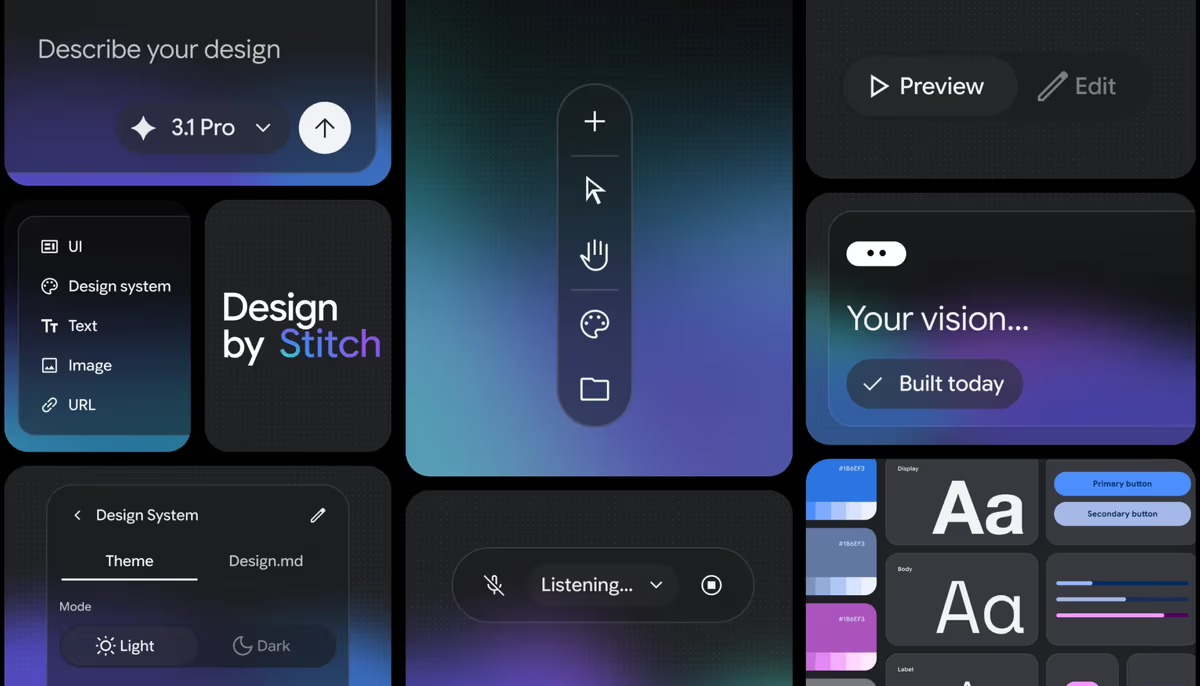
Google Vibe Design is the new aesthetic paradigm introduced by Google Labs through the Stitch project to radically transform the creation of user interfaces. Officially announced on the Google blog, this system allows for the generation of visual components starting from simple text inputs or creative “vibes,” moving beyond the limits of predefined layouts.
Key Takeaways
- Stitch is the experimental tool from Google Labs that enables Vibe Design.
- AI generates colors, fonts, and shapes in real-time based on semantic prompts.
- The goal is to democratize professional design by making it fluid and adaptive.
Features of Google Vibe Design in Stitch
The system underlying Google Vibe Design moves away from classic static style sheets. Stitch uses generative AI models to interpret the user’s desired “mood” and translate it into a coherent visual hierarchy. This approach ensures aesthetic harmony even when interface elements change dynamically, mirroring the evolution of Large Language Models (LLM) in textual semantics.
From static interface to generative UI
The transition from Material Design toward a freer aesthetic represents a significant evolution for the Google ecosystem. While previous systems relied on rigid rules for spacing and color, this new philosophy favors flexibility. Users no longer choose only individual elements but define the overall atmosphere that the AI must reflect in every pixel. This shift raises questions about the future of Web Design now that AI can generate entire layouts in seconds.
The future of Google Vibe Design for developers
The integration of Google Vibe Design promises to drastically accelerate prototyping times for developers and creatives. Thanks to Stitch, the technical barrier between a creative idea and the realization of a functional UI is dismantled, allowing for mass customization. This push for innovation is crucial at a time when Google is under pressure to maintain its technological leadership.