

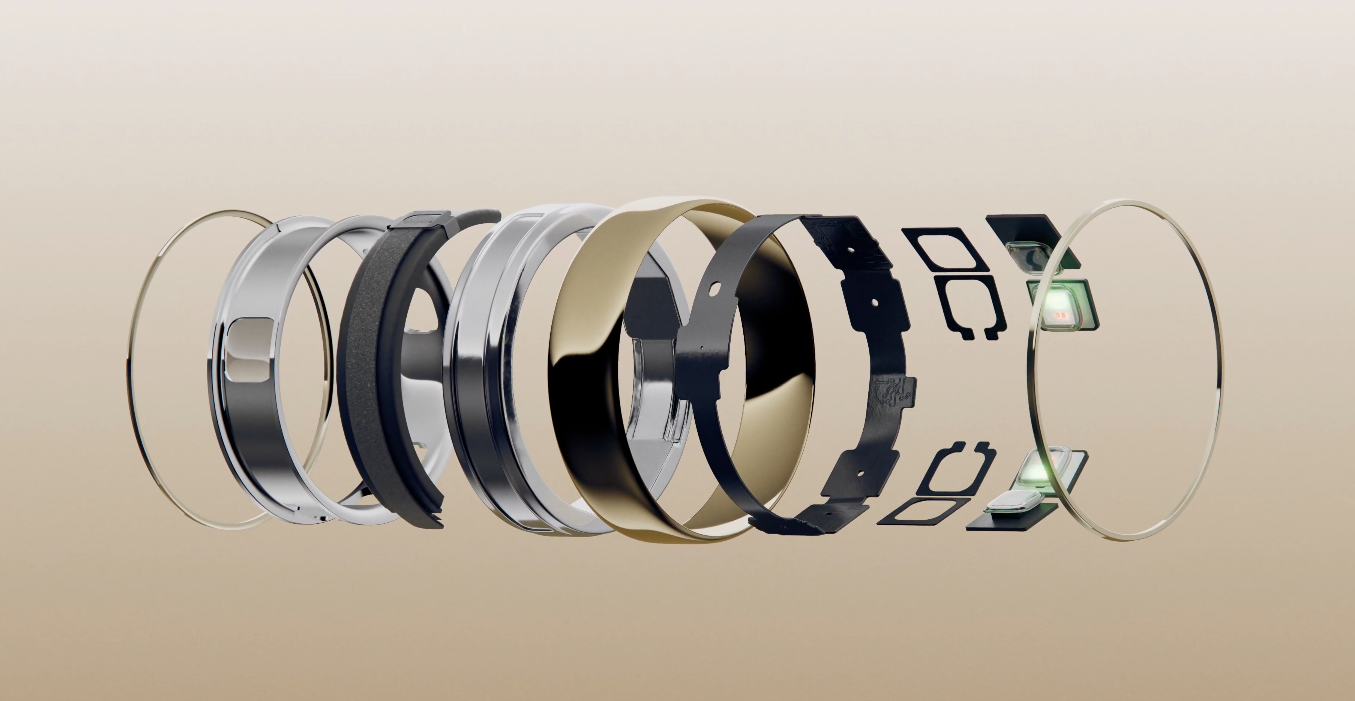
Oura is the Finnish-born, San Francisco-based maker of a smart ring that tracks sleep, heart rate and skin temperature via a paid subscription app. On September 21, 2026 it set a $40 to $44 range for its Nasdaq listing under the ticker OURA, with pricing expected on September 29, according to Bloomberg.
This article covers a technology company and its products. It is not medical advice, and it is not investment advice or a solicitation to buy securities.
Oura’s prospectus is the most detailed public document yet on what a consumer health wearable is worth. It shows three things. A European hardware company had to become American to list. Public investors are being asked to price interpretation of health data, not devices. And the company’s headline accuracy claims are now being tested in court.
Why did a Finnish company redomicile before listing?
Oura was incorporated in 2013 as JouZen Oy. On March 31, 2026 it completed a reorganization that made Oura Inc., a Delaware corporation formed in January, the parent of the group. Oura Health Oy became a subsidiary, and every shareholder received identical economic rights in the new entity.
The listing is mainly a liquidity event. Of the 50 million shares offered, 36.5 million come from existing holders. Of roughly $532.6 million in net primary proceeds at the midpoint, about $526.4 million covers tax withholding on employee restricted stock units that vest at the IPO.
| Item | Figure |
|---|---|
| Shares offered | 50M (13.5M primary, 36.5M secondary) |
| Price range | $40 to $44 |
| Fully diluted valuation | up to ~$15.6B (Reuters) |
| Last private valuation | ~$11B (October 2025) |
| Cornerstone indications | Eli Lilly up to $100M, Dragoneer up to $300M, non-binding |
| Net primary proceeds | ~$532.6M, of which ~$526.4M for RSU tax withholding |
Source: Oura Inc., Form S-1/A, September 21, 2026.
Is Oura profitable?
Yes, at the net income line: $60.8 million in the nine months to June 30, 2026, on revenue of $1.21 billion, up 74%. The $924.3 million loss attributable to common stockholders in some headlines comes from a $985.0 million deemed dividend. Oura repurchased preferred stock from early backers above its carrying value, and US GAAP treats the excess as a distribution to preferred holders. Operating cash flow over the same period was $328 million.
The caveat is duration. In fiscal 2025 Oura earned $12,000, which is effectively breakeven.
| $M, nine months to June 30 | 2026 | 2025 |
|---|---|---|
| Hardware revenue | 974.0 | 588.7 |
| Membership revenue | 240.5 | 108.8 |
| Gross margin | 55% | 51% |
| Net income | 60.8 | 1.6 |
| Loss to common stockholders | (924.3) | (182.8) |
| Paid members | 5.0M | 2.5M |
Source: Oura Inc., Form S-1/A, September 21, 2026.
Hardware still brings in four dollars out of five. The valuation rests on the fifth: a membership business growing 121% a year. Oura calls itself a “health intelligence platform”. It reports nearly 42 billion hours of biometric data used to train its own models, and partnerships that route ring data toward LillyDirect, Eli Lilly’s digital health platform, and Dexcom’s Stelo glucose sensor.
How accurate is the ring, and who decides?
The S-1 claims about 99% accuracy for heart rate, 98% for heart rate variability, 96% for ovulation tracking and 96% for sleep. Heart rate is measured directly by the optical sensor. Sleep stages are inferred from heart rate, movement, breathing and temperature.
That inference is now in court. On August 20, 2026 Madison Surber filed a proposed class action in the Northern District of California. She argues that sleep staging requires brain, eye and muscle signals that no ring can capture. Oura says it stands behind its science. The case is at the pleading stage.
Independent research puts the dispute in proportion. Studies in healthy adults report roughly 90% to 96% agreement with polysomnography on sleep versus wake, and 76% to 79% across four stages. A single accuracy figure means little until the metric is named.
Wellness product or medical device?
Oura markets its features as general wellness and believes they fall outside FDA device requirements. It is seeking FDA clearance for a hypertension-risk feature and has enrolled more than 350,000 participants in an investigational blood pressure study. Accurate signals are still biomarkers, not clinical endpoints: the S-1 cites no evidence that wearing the ring reduces heart attacks, hospitalizations or other hard outcomes.
What does it mean for Europe?
Europe’s Medical Device Regulation 2017/745 draws the same line as the FDA. Under recital 19, software intended for lifestyle and well-being is not a medical device, and qualification depends on the manufacturer’s stated purpose. No notified body reviews wellness accuracy claims. Europe’s safeguard sits in data law instead: under GDPR Article 9, heart rate, sleep and cycle data are special-category health data. That makes Oura’s pledge never to share health data without consent a legal baseline in the EU, not a courtesy.
Europe is also still a small market for Oura: less than 20% of hardware revenue came from outside the United States in the nine months to June. The listing’s more lasting lesson for European founders is structural. A company built in Finland reached public markets as a Delaware corporation, much as digital health scale-ups keep choosing US capital even when their science and early funding are European. The same regulatory gap separates a wellness ring from an implant such as Dialybrid’s silk dialysis graft, which must go through the full MDR route.
FAQ
When does Oura start trading?
Pricing is expected on September 29, 2026, according to Bloomberg, with Nasdaq trading as OURA typically beginning the next day.
Why do some outlets report a $924 million loss?
That figure is the result attributable to common stockholders after a $985 million deemed dividend from preferred stock repurchases. Net income was $60.8 million.
Is Oura Ring a medical device?
No. It is sold as a wellness product in both the US and the EU. A hypertension feature is under study for FDA clearance.
Are Oura’s sleep stages accurate?
They are estimates from heart, movement, breathing and temperature signals. Research shows they are more reliable for sleep versus wake than for separating four stages, and a class action over the accuracy claims is pending.
Sources
- Oura Inc., Form S-1/A, SEC, September 21, 2026
- Oura Inc., Form S-1, SEC, September 3, 2026
- Bloomberg via TechRepublic, September 22, 2026
- Reuters, September 2026
- TechCrunch, September 21 and August 21, 2026
- Surber v. Oura Inc., No. 3:26-cv-08686, N.D. Cal., August 20, 2026
- Sleep Review, September 2026
- MedTech Dive, September 2026
- Regulation (EU) 2017/745, recital 19; Regulation (EU) 2016/679, Article 9