
Nanomedicine applications represent today the most advanced frontier of biotechnology, allowing therapeutic interventions on a molecular scale that were previously unthinkable. Thanks to the integration of nanoparticles and nanometric devices, modern medicine is moving from a generalist approach to millimeter precision in the treatment of the most complex pathologies.
Key Takeaways
- Oncological precision: Selective targeting of cancer cells to reduce side effects.
- Diagnostic evolution: Real-time monitoring through nanometric biosensors.
- Pharmacological efficiency: Overcoming biological barriers for the controlled release of active ingredients.
Main nanomedicine applications in oncology
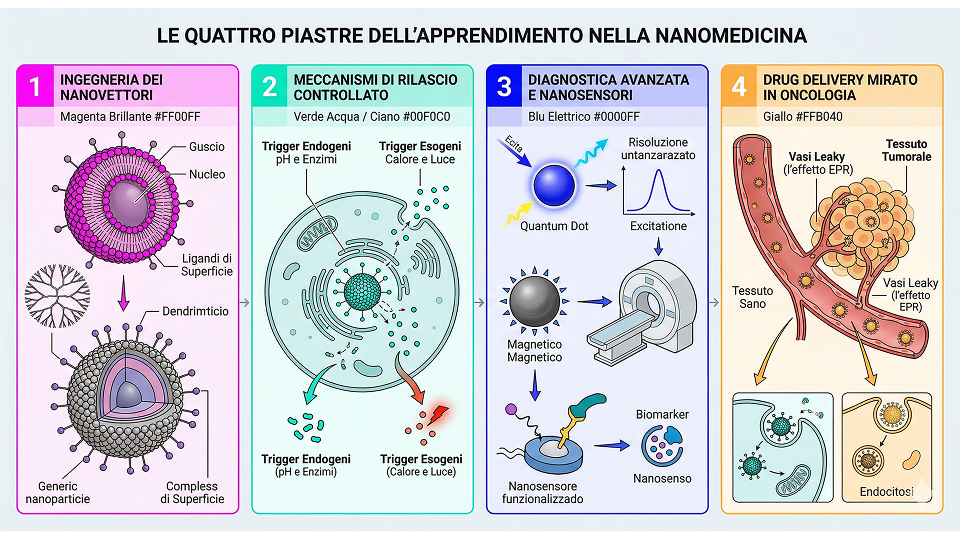
In the oncological sector, nanomedicine applications have demonstrated revolutionary potential. The use of nanocarriers allows for the encapsulation of chemotherapeutics, protecting them from systemic degradation and transporting them directly to the site of the tumor mass. This mechanism, based on the enhanced permeability and retention (EPR) effect, drastically increases treatment efficacy while reducing toxicity to healthy tissues, a historical limitation of traditional medicine.
Advanced diagnostics and nanosensors
Beyond therapy, nanotechnology is redefining early diagnosis. So-called “nanosensors” are capable of detecting specific biomarkers in the blood or tissues at extremely low concentrations, long before clinical symptoms manifest. These tools improve the resolution of imaging techniques such as Magnetic Resonance Imaging (MRI), acting as smart contrast agents that bind exclusively to target cells, providing a detailed mapping of the pathology.
Nanomedicine applications in targeted drug delivery
Nanomedicine applications in controlled drug delivery solve the problem of poor solubility for many therapeutic molecules. Through the use of liposomes, dendrimers, and polymeric nanoparticles, it is possible to program drug release in response to specific stimuli, such as variations in pH or temperature within the body. This ensures that the drug concentration remains within the optimal therapeutic window, improving patient adherence to treatment and recovery rates.