
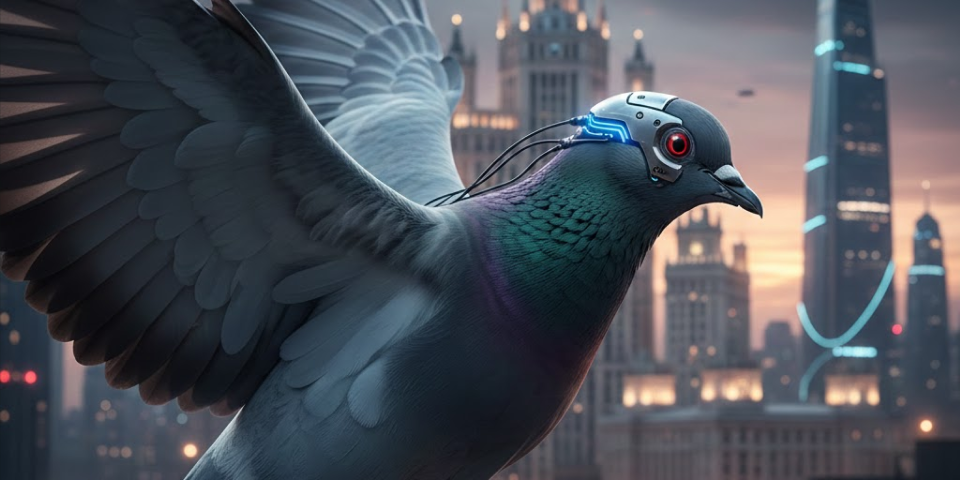
Neiry cyborg pigeons represent the latest frontier in bioengineering applied to environmental monitoring and scientific research in remote areas. The Russian startup Neiry recently announced the completion of preliminary tests on a system that allows guiding a bird’s flight through an advanced neural interface. According to the official Neiry release, the experiment demonstrated the possibility of effectively integrating biology and artificial intelligence.
Key Takeaways
- Startup Neiry implanted a neural chip into a live pigeon to control its movement.
- Artificial intelligence translates digital signals into electrical stimuli for the bird’s nerves.
- Initial tests confirmed the animal can follow preset trajectories without visible stress.
How Neiry cyborg pigeons work
The operation of Neiry cyborg pigeons is based on a miniaturized brain-computer interface (BCI). A chip is connected to the bird’s nervous system, allowing the transmission of electrical impulses that guide flight directions. The proprietary AI algorithm analyzes data in real-time, correcting the path to ensure the pigeon reaches the designated target.
Bio-drones and Russian scientific research
The goal of this project is not to replace mechanical drones, but to create tools capable of operating in contexts where traditional technology fails. These “bio-drones” can move agilely in tight spaces or areas inaccessible to large electronic devices, offering a natural, low-energy solution for environmental data collection.
Neiry Cyborg Pigeon Safety and Testing
During the testing phases of Neiry cyborg pigeons, the startup placed particular attention on animal welfare. The data collected indicate that the bird showed no signs of distress or behavioral alteration during the remote control sessions. The system is designed to deactivate instantly, returning the bird to full natural control if necessary, ensuring the safety of the biological subject throughout the operation.